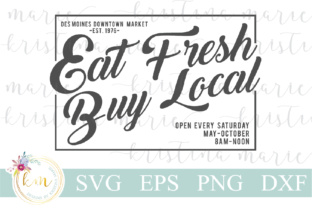
Eat Fresh Graphics for Crafts and Commercial Success
As a digital product creator who has spent years building shops on Etsy, Creative Fabrica, and Shopify, I treat every new asset download with a mix of excitement and skepticism. Before I integrate a file into my commercial catalog, I need to know if it truly adds value to a customer's project or if it is just another generic image that will get lost in the noise. Recently, I reviewed Eat Fresh, a graphic design asset specifically tailored for the crafts and graphics niche. This review breaks down exactly how this illustration fits into a real-world selling strategy, from testing phases to final product listings.
First Impressions: Mood and Market Fit
The moment I opened the folder for Eat Fresh, buy local illustration, the visual personality was immediately clear. It does not scream "generic clipart." Instead, it carries a rustic yet modern vibe that appeals strongly to the farm-to-table movement, health-conscious consumers, and small business owners focusing on organic goods. The style feels approachable and trustworthy, which is exactly what buyers look for when purchasing designs for their own brands.
For sellers, this translates to high perceived value. When you are curating a collection for a seasonal drop or a permanent shop, assets like this help establish brand consistency. It works perfectly for audiences interested in sustainable living, local markets, and fresh produce. Whether you are targeting the Cricut community or print-on-demand customers, the aesthetic suggests quality without being overly complex. It strikes a balance between playful and professional, making it versatile enough for everything from nursery prints to sophisticated packaging labels.
Real-World Testing: From Asset to Inventory
I do not simply upload files and hope for the best. My process involves rigorous testing across various platforms before publishing an Etsy product or a print-on-demand listing. Here is how I tested Eat Fresh to ensure it meets the needs of creative entrepreneurs.
1. File Versatility Check
The download includes a comprehensive suite of formats: 1 SVG, 1 DXF, 1 EPS, and 1 PNG. This variety is crucial for a successful digital download. I immediately opened the SVG in Silhouette Studio and Cricut Design Space to verify the cut lines. The paths were clean, and the layers separated logically, which is a major plus for users creating intricate projects. The DXF file ensures compatibility with other cutting machines, while the EPS file allows vector scaling for large-format printing without pixelation. Finally, the PNG provided a crisp raster option for sublimation and social media use.
2. Mockup Visualization
Before creating a listing, I placed the design onto mockups. I tested it as a t-shirt design on a white cotton tee, a mug design for coffee lovers, and a tote bag print for grocery runs. The illustration held up well against different textures. I also tried it as a sticker design on a die-cut background. The details remained sharp, proving it is suitable for both large merchandise and smaller accessories.
3. Digital Integration
I also explored using this as a core element for a Canva template. By pairing the Eat Fresh illustration with a handwritten font and a serif typeface, I created a cohesive layout that could be sold as a social media kit for food bloggers. The clean lines allowed the text to sit comfortably alongside the graphic, maintaining a strong visual hierarchy.
Product Applications and Revenue Streams
One of the strongest selling points of this asset is its adaptability. A single graphic design asset can spawn dozens of sellable products if used strategically. Here are the specific avenues where Eat Fresh shines:
- Sublimation Designs: Perfect for tumblers, water bottles, and aprons featuring fresh produce themes.
- Printable Wall Art: Ideal for kitchen decor, farmer's market signs, or children's room posters promoting healthy eating.
- Planner Stickers: The compact nature of the design makes it excellent for weekly planner pages focused on meal prep or grocery lists.
- Greeting Cards and Invitations: Great for farmers' market opening invitations, harvest festivals, or spring-themed events.
- Digital Paper Packs: Use the motif to create coordinating backgrounds for scrapbooking kits.
- Blog Graphics: Create eye-catching thumbnails for content creators writing about local sourcing or nutrition.
By bundling these possibilities, you can create a robust design bundle that offers high value to the buyer. For instance, a "Farm to Table Bundle" could include the main illustration, matching fonts, and coordinating icons, all derived from the same visual theme.
Strategic Risks and Considerations
While the asset is high-quality, there are areas where caution is required to maintain professionalism. Not every application yields a positive result, and understanding these limitations is key to avoiding negative reviews.
Resolution and Scale
While the vector files (SVG, DXF, EPS) allow for infinite scaling, the PNG must be checked for resolution. If you intend to use this for large format printing, relying solely on the PNG without verifying the DPI could lead to blurry results. Always test the print output at full size before listing.
Contrast and Backgrounds
If the illustration relies heavily on light colors, it may disappear on dark backgrounds unless a stroke or shadow is added. Sellers should preview the design on both light and dark mockups to ensure visibility. Similarly, placing this asset on a crowded thumbnail can make it unreadable. Keep your listing images clean to let the design breathe.
Cutting Complexity
For Cricut projects or Silhouette projects involving tiny details, ensure the cut lines are distinct. If the design features very fine hairlines, they might break during the cutting process for materials like vinyl or iron-on. Always run a test cut on a sample material to confirm durability.
Practical Seller Notes for Launching
To maximize the success of your commercial design efforts, follow these practical steps before hitting publish:
- Verify Licensing: Confirm the commercial license terms. Ensure you are allowed to resell finished physical products made with this asset.
- Font Pairing: Test the design with various typography styles. A bold sans-serif font creates a modern look, while a script font adds a personal, handmade touch. Display fonts can work well for headers.
- File Organization: When delivering the digital product to your customers, organize the zipped folder clearly. Include a PDF guide explaining how to use each file type (e.g., "Use SVG for cutting, PNG for printing").
- Thumbnail Appeal: Your listing image is your first impression. Show the Eat Fresh illustration in context, perhaps on a tote bag or a framed print, to help buyers visualize the end result.
- SEO Optimization: Use keywords naturally in your titles and tags. Terms like "farm fresh," "local market," "vegan," and "organic" align well with the visual theme.
Final Verdict on Eat Fresh
In the competitive world of online selling, finding a reliable design asset that balances aesthetics with functionality is rare. Eat Fresh delivers on both fronts. Its clean lines, thematic relevance, and robust file support make it a valuable addition to any creator's toolkit. Whether you are a seasoned designer or a small business owner looking to expand your brand identity, this illustration provides a solid foundation for building a professional-looking product line.
By testing the design thoroughly, respecting its technical limitations, and presenting it through high-quality mockups, you can turn this single asset into a profitable revenue stream. It is more than just an image; it is a tool for storytelling that resonates with buyers who value authenticity and quality.