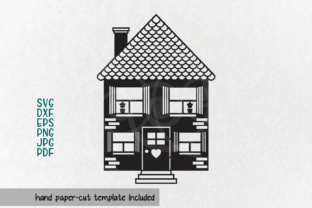
House: A Designer's Real-World Embroidery Review
When I first opened the House file to prepare for a custom order, my initial reaction wasn't about the technical specs or the file formats. It was about the mood. In the world of digital graphics and embroidery files, it is easy to get lost in the noise of complex patterns and overly intricate details that look great on a screen but fall apart under the needle. House, however, feels different. It carries a quiet confidence. The shape is clean, the lines are purposeful, and the overall aesthetic screams "cozy home" without trying too hard. As someone who reviews designs for actual client work, I am always looking for that sweet spot where visual appeal meets stitchability. This set of two items seems designed exactly for that balance.
The First Impression: Mood and Visual Personality
Before running a single test stitch, I evaluated how House translates from a flat graphic into a tactile element. The design creates an immediate sense of warmth and belonging. It isn't just a building; it feels like a destination. For crafters and small business owners, this emotional connection is crucial. When a customer sees a finished product, they want to feel something. Whether this is going onto a nursery pillow cover, a tote bag for a new homeowner, or a holiday gift for a family, the design has the right amount of detail to be interesting without becoming cluttered.
The layout suggests versatility. It works as a standalone statement piece on a sweatshirt chest pocket or as part of a larger collection on a kitchen towel. The simplicity of the form allows it to adapt to various color palettes, making it a strong candidate for seasonal collections. However, the real test for any embroidery project is not how it looks in a mockup, but how it behaves during production.
Real-Life Application: From Screen to Stitch
I put House through a simulated workflow typical for an Etsy seller preparing a batch of personalized gifts. Imagine a scenario where you are creating a line of embroidered patches for a boutique shop. You need a design that holds up to frequent handling and washing while maintaining its crisp edges. The House design offers a solid foundation for this. Its geometric nature means there are fewer curves to battle against fabric tension, which often leads to puckering issues in less experienced hands.
In a commercial setting, such as decorating custom apparel for a local coffee shop or a team event, clarity is king. If your logo or design is too dense, it can look muddy when stitched on dark fabrics. The House file appears to have open spaces that allow for good thread coverage without overwhelming the material. This makes it excellent for custom apparel like hoodies or aprons where the design needs to stand out against the background fabric texture.
For those of us selling digital products or printables, the inclusion of both SVG and DXF formats is a significant plus. While these are primarily cutting file formats compatible with Cricut and Silhouette, their presence here suggests the design is versatile enough for applique work or vinyl layering before being transferred to a machine. If you are creating a hybrid product—say, a patch that combines cut felt with machine stitching—the House geometry provides a clear guide for precision cutting. This dual-format capability adds value for craft business owners who need to maximize their asset library.
Where Caution is Required: Technical Considerations
Even the most beautiful design requires strategic planning. There are specific scenarios where House might need extra attention. If you are working with a very small hoop size, such as those used for caps or delicate baby clothing, you must verify the scale of the design. A design that looks perfect on a 4x4 hoop might lose definition if shrunk down for a hat brim. Always check the dimensions before committing to a final run.
Fabric choice plays a massive role in the final outcome. On stretchy knits or thin, sheer materials, the density of the stitches could cause distortion. For these applications, using the correct stabilizer is non-negotiable. A heavy-duty cutaway stabilizer might be necessary for a sturdy tote bag, while a tear-away might suffice for a lightweight pillowcase. Without the proper support, even a well-designed file like House can result in a finished product that looks wrinkled or misshapen.
Additionally, consider the thread colors. High contrast is generally safer for recognition, but if you plan to use a tonal approach (e.g., grey house on a white shirt), ensure the stitch density is sufficient to prevent the fabric texture from showing through too much. Dark fabrics require a high-density fill or a backing layer to ensure the design pops, whereas light fabrics offer more freedom for subtle shading.
Impact on Product Value and Brand Consistency
In the handmade market, professionalism is often defined by the consistency of your output. A design that stitches cleanly every time builds trust with your customers. House possesses a structural integrity that suggests reliability. When a buyer receives a personalized gift featuring this design, they perceive the quality of the craftsmanship. It elevates the perceived value of the item, allowing you to price your handmade product competitively.
Furthermore, the clean lines of the design contribute to brand consistency. If you are building a boutique brand around home decor or lifestyle goods, having a signature motif like House helps create a recognizable visual identity. It fits seamlessly into a collection of Graphics and Crafts assets, whether you are creating printable mockups for listings or physical tags for your packaging. The design acts as a silent ambassador for your shop, communicating a sense of care and attention to detail.
Practical Designer Notes for Success
Before you start mass-producing items with House, follow these essential steps to ensure a flawless result:
- Test on scrap fabric first: Never assume the settings will work perfectly on your final material. Run a test on a scrap piece of the same fabric and stabilizer combination to check for puckering or thread breaks.
- Review stitch density: Inspect the design file to see if the fill areas are too dense for your chosen thread count. Adjustments may be needed to prevent needle deflection.
- Confirm hoop size: Ensure the design fits comfortably within your machine's hoop without requiring awkward re-hooping, which can lead to registration errors.
- Check thread color contrast: Use black and white mockups to visualize how the design will appear on different backgrounds before purchasing threads.
- Verify licensing: Since this is a digital asset, confirm the terms of use regarding commercial projects. Are you allowed to sell finished items made with this design? Do you need a specific license for digital resale?
- Inspect small details: Zoom in on the corners and fine lines. If there are tiny elements, consider simplifying them or ensuring your machine can handle the resolution.
Ultimately, House is more than just a set of vector paths; it is a tool for storytelling. Whether you are a hobbyist making a birthday gift or a seasoned entrepreneur expanding your Etsy seller inventory, this design offers a reliable canvas for your creativity. By understanding its strengths and respecting its limitations, you can transform a simple digital file into a cherished, tangible memory for your customers.